 Until recently there hasn’t been a really effective treatment for Alzheimer’s disease. The only approach was prevention strategies.
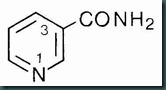
Well, there is now a safe, inexpensive and effective treatment. It is using vitamin B3 – Nicotinic Acid (in the form of niacinamide, a no-flush form of niacin or B3).
Nicotinic acid (B3) and its amide, niacinamide, are called vitamers, because both equivalently act as a vitamin. Niacin (a word derived from the Nicotinic acid vitamin) is a generic term describing both vitamers together.
An observational study of over 6,000 people 65 years of age and older found that compared to people in the lowest fifth of niacin intake, those with higher intake had reduced between 20% to 50% the progression and risk of Alzheimer's Disease. This result was after adjustment for age, sex, race, education, ApoE type and intake of vitamins E & C as well as beta-carotene. The effect was specific to B3, as opposed to the other B vitamins [JOURNAL OF NEUROLOGY, NEUROSURGERY, AND PSYCHIATRY; Morris,MC; 75(8):1093-1099 (2004)].
In further research, Niacinamide was also shown to cause a 60% decrease in the marker called tau protein.
Niacinamide additionally increased microtubules, which carry information inside brain cells. Microtubules are like highways inside the cells. Niacinamide makes the highways wider and more stable.
Some of the research done with mice and niacinamide brought the mice back to the level where they didn’t have the pathology. It even improved the behavior in non-demented animals.
The researchers think that niacinamide is good for Alzheimer’s disease and normal people, too. Since niacinamide has been used extensively for many purposes over the past 60 years, its safety is well proven.
The amount of niacinamide that is recommended is 1,000 milligrams taken three times a day.
In adult doses above 3 grams per day niacinamide has a potential for causing liver damage [DIABETOLOGIA; Knip,M; 43(11):1337-1345 (2000)]. Always seek your doctor’s advice in determining dosage safe for you.
As an aside, nearly everyone in another study reported that their arthritis symptoms disappeared after three to four of months of taking niacinamide.


