Showing posts with label Age-Related. Show all posts

Taking B-Vitamins May Help Reduce The Risk Of Alzheimer’s Disease

bA study published in Public Library of Science One conducted by the University of Oxford found that a combination of folic acid, Vitamins B6 and B12 (which are all B-Vitamins) appears to slow brain atrophy in elderly patients with mild cognitive impairment.

The study followed 168 participants over two years. One-half were treated with a European drug called TrioBe Plus® which contained a combination of folic acid (0.8 mg/d), and Vitamins B6 (20 mg/d) and B12 (o.5 mg/d). The other group received a placebo.

Those taking the vitamins had on average 29.6% less brain shrinkage. The vitamins also reduced homocysteine by 22.5%. Homocysteine was found in The Framingham Study to double a person’s risk of dementia if they had homocysteine levels above 14 micromoles per liter of serum.

By the way, this is an example of where a drug company is researching a combination of vitamins and if successful, then the drug company will patent the vitamin formula. The drug company will then be able to raise the price of the vitamins to drug price levels.

Fortunately, you can still get a B-Complex which will have all these ingredients. You can even buy them separately. So…if someone you know has dementia, get them taking these B-Vitamins.

So, What to Do If You Do Have Abnormal Test Results on the Alzheimer’s Balance Test?

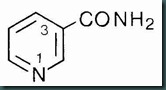
niacinamideUntil recently there hasn’t been a really effective treatment for Alzheimer’s disease. The only approach was prevention strategies.

Well, there is now a safe, inexpensive and effective treatment. It is using vitamin B3 – Nicotinic Acid (in the form of niacinamide, a no-flush form of niacin or B3).

Nicotinic acid (B3) and its amide, niacinamide, are called vitamers, because both equivalently act as a vitamin. Niacin (a word derived from the Nicotinic acid vitamin) is a generic term describing both vitamers together.

An observational study of over 6,000 people 65 years of age and older found that compared to people in the lowest fifth of niacin intake, those with higher intake had reduced between 20% to 50% the progression and risk of Alzheimer's Disease. This result was after adjustment for age, sex, race, education, ApoE type and intake of vitamins E & C as well as beta-carotene. The effect was specific to B3, as opposed to the other B vitamins [JOURNAL OF NEUROLOGY, NEUROSURGERY, AND PSYCHIATRY; Morris,MC; 75(8):1093-1099 (2004)].

In further research, Niacinamide was also shown to cause a 60% decrease in the marker called tau protein.

Niacinamide additionally increased microtubules, which carry information inside brain cells. Microtubules are like highways inside the cells. Niacinamide makes the highways wider and more stable.

Some of the research done with mice and niacinamide brought the mice back to the level where they didn’t have the pathology. It even improved the behavior in non-demented animals.

The researchers think that niacinamide is good for Alzheimer’s disease and normal people, too. Since niacinamide has been used extensively for many purposes over the past 60 years, its safety is well proven.

The amount of niacinamide that is recommended is 1,000 milligrams taken three times a day.

In adult doses above 3 grams per day niacinamide has a potential for causing liver damage [DIABETOLOGIA; Knip,M; 43(11):1337-1345 (2000)].  Always seek your doctor’s advice in determining dosage safe for you.

As an aside, nearly everyone in another study reported that their arthritis symptoms disappeared after three to four of months of taking niacinamide.

A Balance Test to Predict Alzheimer’s Disease

Balance-AlzheimersThere’s now a simple balance test that may predict cognitive decline in Alzheimer’s Disease.

This study was published in the Journal of Alzheimer’s Disease and was carried out in 16 university hospitals with 686 outpatients.

What the participants did was a one-leg balance where they were asked to stand on one leg for as long as possible.  The results were abnormal when the participant was unable to stand on one leg for 5 seconds or more.

The participants who were judged abnormal on the test showed significantly more cognitive decline at 12, 18 and 24 months than participants who were normal at the beginning of the study and at the follow-up.

The researchers believe that the one-leg balance test is a predictor of advanced dementia.

Your Mouth Is Dry, What To Do Besides Drinking Water

q10About 30% of people over 65 have dry mouth syndrome. People who suffer from this lack saliva production which can cause a difficulty in swallowing, sore throats and bad breath. It can lead to tooth decay and oral infections.

Rather than take drugs, try coenzyme Q10. Volunteers who were given 100 mg of C0Q10 daily for a month had significantly improved salivary secretion.

The best form of CoQ10 is ubiquinol.

(Reported Whitaker Newsletter May 2011)

Omega-3 Fatty Acids – Affecting Age-Related Macular Degeneration

omegaeyeA study published in the Archives of Opthalmology found that omega-3 fatty acids may significantly reduced the risk of developing age-related macular degeneration (AMD).

The researchers followed 38,022 women for 10 years. They found a 45% lower risk of AMD occurring. Since AMD has no other recognized means of disease prevention, using omega-3 is a real breakthrough.

The participants were eating one or more servings of fish per week. While the study used fish oil,  I believe the same krill oil in the article before this one will have the same positive impact as the fish eaten in this study.

So…two results for the price of one supplement.

Power Of Resveratrol Gets A Boost

resveratol3You may have heard that wine can help with aging. It turned out that it was the resveratrol in the skin of red grapes that was having the positive anti-inflammatory effect .

It also turned out that these positive changes had only been observed in the test tube.

Well, there’s now a report on its positive impact on humans. This was from a study reported in the Journal of Clinical Endocrinology and Metabolism.

In the study 20 healthy participants were randomized to receive a placebo or 40 mg of resveratrol over a six-week period.

The researchers reported a potent anti-inflammatory effect for the participants treated with resveratrol. 

Soothing Arthritis Pain

skookum My brother, Stan, and his wife, Heidi, were recently on a cruise to Alaska (lucky people). At one of the stops, as they were wandering around town they walked into a local shop and made a "wonderful find".

The shop is run by Harlena Warford, a native Tlinget medicine woman. She had an ointment to stop arthritis pain. Since they both have pain from arthritis, Harlena kindly allowed them to rub some of the ointment into the areas of their pain.

They left the store and continued to walk around town.

About 20 minutes later, they both realized that their pain was gone. They immediately walked back to the store and purchased some of the ointment.


I’ve personally purchased the ointment and have recommended it to several people. They have been reporting great results with it.

To find out about getting the ointment for yourself, go to http://linkbee.com/GutShuWu and get the Skookem Ointment. Harlena also says you can use it for fibromyalgia, neuropathy, lupus and other degenerative diseases.

Another product Harlena offers is Devils Club oil and ointment, which can be used for massaging sore muscles, psoriasis and eczema.

Get A Dog And Live Longer!

mansbestfriend Even though I have dog I’m not making a prejudice statement. It seems that dog owners 50 and older see their doctors less often, have fewer illnesses and recover more quickly when they are sick verses those who don’t have a dog.

Researchers have even found that simply petting an animal lowers blood pressure by producing an instant relaxation response in the body.

Alan Beck, Sc.D., from the Purdue University School of Veterinary Medicine reported that animal owners had a higher one-year survival rate following a heart attack than a non-pet group, even when both groups were doing the same level of exercise.

Perhaps retirement communities should reconsider their no pet policies and hospitals and nursing homes could allow the family pet to come to visit the patient.

(As reported in AARP Magazine)

The Importance Of Exercising As You Age Has Just Gone Up

archivesinternalmedicine A study reported in the Archives of Internal Medicine clearly supports continuing to exercise, even for the very oldest among us.

The three-year survival rate was about three times higher for active 85-year-olds who were doing four hours of exercise a week versus the inactive ones.

Even previously sedentary 85-year-olds had a three-year survival rate, double that of inactive 85-year-olds.

As a further plus, the active oldsters also reported less depression and loneliness and a greater ability to perform daily tasks.

So the old adage of “use it or lose it” has taken on new importance for everyone. Just check with your Doc first.

(Reported by Lindsey Tanner, Associated Press)

Getting Through The Medicare Doughnut Hole

As you may know, people on Medicare and taking needed prescription drugs, can fall into doughnutholethe “doughnut hole,” which means that they have to pay 100% of the cost of their medications out of their own pocket.

Once their medical out-of-pocket expenses have reached the catastrophic level, the government will pay for their meds.

Now you have an online tool, the AARP Doughnut Hole Calculator, that will give you some options to either avoid or postpone the “doughnut hole” altogether.

The tool, which will tell you when you might hit the hole and gives tips on how to stay out of the hole, is located at http://linkbee.com/DoughnutTool.

The site automatically lists less expensive medication alternatives.

Checking Out Of The Emergency Room Can Be Dangerous To Your Health

When people check out of the emergency room, they are given care   emergencyroom and discharge instructions. According to researchers at Northwestern  University’s Feinberg School of Medicine, 78% of the patients didn’t  fully understand the instructions they were given.

Further, 80% weren’t even aware that they didn’t understand. This means that these patients may have a greater likelihood of complications after leaving the emergency room.

One of the best things you can do to protect yourself is to bring a family member or friend to ask questions and help remember the care instructions. Be sure to ask the doc or nurse to clearly write everything down that you are to do.

(Reported Northwestern Winter 2008)

Preventing Alzheimer’s Disease

The Oxygen Club of California held its annual meeting in March 2008. Several presentations focused on Alzheimer’s disease.

One study had patients taking 600 mg of alpha-lipoic acid per day for Alzheimers four years. Patients with early dementia who were on this regimen exhibited less deterioration in cognitive function.

Another study found that genistein from soy (tested in vitro) may prevent cognitive decline.

A third study fed pomegranate juice to mice used to model Alzheimer’s; researchers found a 50% reduction in the formation of amyloid  beta-peptides, which was associated with improved cognitive and physical performance.

Cut Hot Flashes In Half


Scientists at the Mayo Clinic studied 21 post-menopausal women who had at least 14 hot flashes per week. None of the women were using hormone replacement therapy. When the women sprinkled 4 tablespoons of crushed flaxseed daily into the foods that they were eating, such as yogurt, cereal, juice or water, the severity and the number of their hot flashes dropped 50%.

It took about six weeks to get these results. Also, the researchers suggest starting with 2 tablespoons and working up to the full amount because the added fiber can cause abdominal discomfort. Finally, make sure you are drinking a glass of liquid when you eat the flaxseed.

My suggestion is to get a grinder. Just grind up what you need to eat each day. You can do a Google search for flax seed grinders. So…ladies, now you can grind your way to cooler temperatures.
(Reported Prevention, January 2008)

The Way You Talk To Seniors Can Affect Their Health

The Way You Talk To Seniors Can Affect Their Health

Did you know that the way health care professionals talk to older people that can actually affect their health? Some examples are:

· When the doctor talks to adult children about their elderly parent, who is right there, instead of talking directly to the person;

· The clerk who assumes that an older person needs to be addressed slowly or in a loud voice; or

· An older person is addressed by the health care worker using the familiar term “dear”, rather than the person’s name.

As reported in The Virginian Pilot, these innocent insults can have health consequences. A long-term study of 660 people over age 50 in a small Ohio town was published in 2002 by Rebecca Levy, a Professor at Yale University. Levy found that those who had positive perceptions of aging lived an average of 7.5 years longer.

Other studies found that older people exposed to negative portrayals of aging performed worse on memory tests, walked slower and had higher levels of stress. One study, to be published in December, used video tapes of older people with mild to moderate dementia and their care givers. It was observed that when the nurses used phrases like “good girl” or “How are we feeling?” patients were more aggressive and less cooperative or receptive to care.

The health care workers in those videos thought the statements that they were making conveyed that they cared. Instead the patient was interpreting the message as saying that the older person was incompetent.

So…when you are with an older person, talk to them and treat them as an adult.

Seniors Save Money Going To The Gym

Seniors Save Money Going To The Gym

In a study reported last January, the Centers for Disease Control and Prevention found that seniors who went to the gym two or more times a week over two years averaged health care cost savings of over $1,200 more than those who went less than once a week.

Since regular exercise helps control weight, strengthens bones and joints, lowers pain and anxiety, reduces cardiovascular disease and increases brain health, it’s not surprising that all these added together for a bottom-line dollar impact in people’s health care costs.

With all the changes about to happen in health care, regardless of who is elected, why don’t you start your own savings program by exercising two or more times a week?

The Importance Of Vitamin B12 To Keep Your Brain Young

About 40% of the US population is deficient in Vitamin B12. Recent research has shown that older people with low levels of Vitamin B12 are at increased risk for brain atrophy or shrinkage. Brain atrophy is associated with Alzheimer’s disease and impaired cognitive function.

This study, involving more than 100 volunteers aged 61 to 87, found that individuals with the lowest Vitamin B12 levels at the start of the study had a greater decrease in brain volume after five years. Those with the lowest levels of B12 had a six-fold greater rate of brain loss.

An important fact to note is that none of the participants were actually deficient in Vitamin B12, though they were in the low level of normal range.

As I said, since 40% of the population is actually deficient, this means the number of older people experiencing brain loss is probably much higher. It also means having a blood test that shows your B12 level is in the ‘normal range’ might not mean that you are at the level for optimum healthy brain functioning.

So…get your Vitamin B12 level checked by your doctor and make sure you aim to keep it at the higher end of the normal range.
(Reported in Neurology 2008)

Are People Living Longer Going To Strain The Economy?

>Are People Living Longer Going To Strain The Economy?

Appears that the answer is no.

According to a research study by the AARP, the cost of entitlement programs, such as social security, Medicare and Medicaid, have remained remarkably steady as a percentage of the gross domestic product.

It is even a smaller percentage today than when Ronald Reagan became president 26 years ago.

The researchers found that the real problem is out-of-control health care costs. These increasing costs are due in large measure to advances in medical technology. The AARP’s position is that we have to make the health care system more effective, efficient and affordable, and it has to be done now.
(Reported AARP November & December 2007)

Bookmark and Share Bookmark this post/blog

Drug Side-Effects Are Robbing The Body of Nutrients

You may not be aware that many prescription drugs affect the way our bodies absorb and use essential nutrients.  Analyzing four categories of common drugs for correlations to the loss of nutrients reveals the following potential deficiencies and what supplement to take to avoid the deficiency:

  • Statins, which lower cholesterol, deplete Coenzyme Q10 (CoQ10) – Take 30 to 60 mg daily

  • Vasodilators for high blood pressure deplete Vitamin B6 – Take 2 mg daily

  • Beta-blockers for high blood pressure deplete CoQ10 – Take 30 to 60 mg daily

  • Diuretics for hypertension or congestive heart failure deplete magnesium, potassium and zinc – Take up to 400 mg of magnesium, 8 mg of zinc and 3,500 mg of potassium

  • Hormone therapies such as birth control pills deplete Vitamin B6, Vitamin C, folic acid, magnesium, zinc – Take 2 mg B6, 75 mg of Vitamin C, 400 mcg of folic acid, 400 mg of magnesium and 8 mg of zinc.

Bookmark and ShareMark this Feed

If your doctor prescribes any of these drugs be sure to ask about the wisdom of taking these recommended supplements to offset the potential nutrient depletion from the drugs.

Black Currants May Help Reduce The Risk Of Alzheimer’s like Blueberries!

Black currants are having a resurgence in popularity. A study published in the Journal of the Science of Food and Agriculture reported that the berries may help reduce the risk of Alzheimer’s by protecting neurons against damage from peptides associated with the disease.

Black currants are almost as powerful as blueberries in the antioxidant levels they contain. Several studies have also shown that they may also enhance mood!

Look for black currants in jellies and jams. Old Orchard Brands sells a black currant juice.  (Reported in Alternative Health)

So if Blueberries aren't your favorite, try Black Currants.....

Bookmark and Share Bookmark this post

Living To 150, Even Barbara Walters Is OnBoard

There is a seminar that I’ve been doing for a long time called Staying Younger Longer. One of the premises is that we can live to be 150 years old healthfully. Well, Barbara Walters is now joining in. Her latest TV Special is called “How to Live to 150.”

Even if you don’t believe it’s possible to live that long, just think of it as an idea. By this I mean, if you’re going to live to 150, you don’t retire at 65 when you have 85 years to go; you don’t stop exercising at 55 when you have 95 years to go; and you don’t hesitate to change careers at 45 when you have 105 to go.

So go ahead and just experience the power of this idea. Remember even if it doesn’t turn out to be true for you, what have you lost?

.......