Showing posts with label Alzheimer's. Show all posts

Taking B-Vitamins May Help Reduce The Risk Of Alzheimer’s Disease

bA study published in Public Library of Science One conducted by the University of Oxford found that a combination of folic acid, Vitamins B6 and B12 (which are all B-Vitamins) appears to slow brain atrophy in elderly patients with mild cognitive impairment.

The study followed 168 participants over two years. One-half were treated with a European drug called TrioBe Plus® which contained a combination of folic acid (0.8 mg/d), and Vitamins B6 (20 mg/d) and B12 (o.5 mg/d). The other group received a placebo.

Those taking the vitamins had on average 29.6% less brain shrinkage. The vitamins also reduced homocysteine by 22.5%. Homocysteine was found in The Framingham Study to double a person’s risk of dementia if they had homocysteine levels above 14 micromoles per liter of serum.

By the way, this is an example of where a drug company is researching a combination of vitamins and if successful, then the drug company will patent the vitamin formula. The drug company will then be able to raise the price of the vitamins to drug price levels.

Fortunately, you can still get a B-Complex which will have all these ingredients. You can even buy them separately. So…if someone you know has dementia, get them taking these B-Vitamins.

The Power of Your Subconscious Mind

submind2It turns out only a tiny portion of your mind is dedicated to conscious behavior. The rest is the subconscious mind regulating our organs, digestion, breathing and even the flashes of insight we get.

The best way to mess up this finely tuned system is to attempt to do even simple things consciously. Some simple examples: if you play the piano, concentrate on your fingers: and if you are a golfer, analyze your swing while you are doing it. This type of memory is called implicit memory, which means that your brain holds this knowledge and your mind cannot explicitly access it. These two types of memory are so distinct you can damage one without hurting the functioning of the other.

An illustration would be research that has been done with patients who cannot consciously recall new experiences in their lives. The researchers spent the afternoon teaching the patients a video game. The next day, the patients said they had no recollection of learning the game and that they had never see it before.

When the researchers looked at the patient’s performance, they found the patients improved as much as a group of controls who had no memory problems. This means the implicit part of their brain learned the game and it allowed them to improve their skills.

Another example is with dementia patients. If you read them a story one day and then read the same story the next several days, the dementia patients will become bored even though they have no conscious memory of having heard the story before.

So…if you know someone with dementia, make sure to continue to give them varied activities to do.

(Reported Discover September 2011)

So, What to Do If You Do Have Abnormal Test Results on the Alzheimer’s Balance Test?

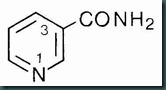
niacinamideUntil recently there hasn’t been a really effective treatment for Alzheimer’s disease. The only approach was prevention strategies.

Well, there is now a safe, inexpensive and effective treatment. It is using vitamin B3 – Nicotinic Acid (in the form of niacinamide, a no-flush form of niacin or B3).

Nicotinic acid (B3) and its amide, niacinamide, are called vitamers, because both equivalently act as a vitamin. Niacin (a word derived from the Nicotinic acid vitamin) is a generic term describing both vitamers together.

An observational study of over 6,000 people 65 years of age and older found that compared to people in the lowest fifth of niacin intake, those with higher intake had reduced between 20% to 50% the progression and risk of Alzheimer's Disease. This result was after adjustment for age, sex, race, education, ApoE type and intake of vitamins E & C as well as beta-carotene. The effect was specific to B3, as opposed to the other B vitamins [JOURNAL OF NEUROLOGY, NEUROSURGERY, AND PSYCHIATRY; Morris,MC; 75(8):1093-1099 (2004)].

In further research, Niacinamide was also shown to cause a 60% decrease in the marker called tau protein.

Niacinamide additionally increased microtubules, which carry information inside brain cells. Microtubules are like highways inside the cells. Niacinamide makes the highways wider and more stable.

Some of the research done with mice and niacinamide brought the mice back to the level where they didn’t have the pathology. It even improved the behavior in non-demented animals.

The researchers think that niacinamide is good for Alzheimer’s disease and normal people, too. Since niacinamide has been used extensively for many purposes over the past 60 years, its safety is well proven.

The amount of niacinamide that is recommended is 1,000 milligrams taken three times a day.

In adult doses above 3 grams per day niacinamide has a potential for causing liver damage [DIABETOLOGIA; Knip,M; 43(11):1337-1345 (2000)].  Always seek your doctor’s advice in determining dosage safe for you.

As an aside, nearly everyone in another study reported that their arthritis symptoms disappeared after three to four of months of taking niacinamide.

A Balance Test to Predict Alzheimer’s Disease

Balance-AlzheimersThere’s now a simple balance test that may predict cognitive decline in Alzheimer’s Disease.

This study was published in the Journal of Alzheimer’s Disease and was carried out in 16 university hospitals with 686 outpatients.

What the participants did was a one-leg balance where they were asked to stand on one leg for as long as possible.  The results were abnormal when the participant was unable to stand on one leg for 5 seconds or more.

The participants who were judged abnormal on the test showed significantly more cognitive decline at 12, 18 and 24 months than participants who were normal at the beginning of the study and at the follow-up.

The researchers believe that the one-leg balance test is a predictor of advanced dementia.

Coconut Oil Is Coming On Strong

coconutoilA few years ago, the thought of having coconut oil as a regular part of your diet would have raised all kinds of objections that you’d be getting too much fat in your diet.

Well, times have changed and so has the information available to help us make a decision about it. Today, we realize there are fats that are actually helpful to us and one of them is coconut oil.
 
It turns out unprocessed virgin coconut oil consists mostly of lauric acid, which confers several health benefits. It turns out lauric acid doesn’t raise cholesterol, clog arteries or create other cardiovascular risks.

As a matter of fact, it actually enhances immune function and in therapeutic doses it may reduce the symptoms of Alzheimer’s disease.

Tea + Exercise + Vitamin D Can Stop Dementia

Three studies were presented at the Alzheimer’s Association International Conference, all reporting a reduction in the risk of brain decline by doing physical activity by regular tea drinking or adequate Vitamin D.

The study on exercise tracked more than 1200 elderly people over 20 years. It found that 242 developed dementia. Participants who performed moderate to heavy levels of physical activity had a 40% lower risk of developing any type of dementia. Those who reported the least amount of activity were 45% more likely to develop dementia.

The study on tea drinkers included 4800 men and women 65 and older. The participants were followed for 14 years. Those who drank tea one to four times a week had an average rate of decline 37% lower than people who didn’t drink tea.

The study on Vitamin D looked at 3325 US adults aged 65 and older. For those deficient in Vitamin D the risk of cognitive impairment increased about 42%. For those severely deficient in Vitamin D, the risk increased 394%.

These are great ways to stop dementia in its tracks. So…take some Vitamin D with tea and move your body.

Drinking Tea Can Improve Mental Focus

teamemory Dutch researchers asked volunteers to perform tasks designed to test their attention before, 10 minutes after and an hour after drinking a beverage that contained the two most active ingredients in tea.

The tea drinkers scored significantly better than the controls. The two compounds that had this impact were caffeine and L-theanine.

While caffeine can make some people jumpy, L-theanine doesn’t have that effect. L-theanine improved concentration by rapidly increasing the activity of alpha waves in the brain while boosting the levels of GABA, a neurotransmitter that calms the brain and relieves anxiety. You can get the benefit of L-theanine by drinking tea or taking a supplement with Suntheanine.

So…tea anyone?

(Reported Health & Healing by Dr. Julian Whitaker April 2010)

Combining Vitamin D With Curcumin May Affect Brain Health

curcumin I’ve written many times about the benefits of Vitamin D3 and curcumin. Now researchers are combining the two as a way to boost the body’s immune system and also help clear protein plaques out of the brain that are linked to Alzheimer’s Disease.

The researchers in this study, published in the Journal of Alzheimer’s Disease, took blood samples from nine Alzheimer’s disease patients and treated them with Vitamin D and curcumin. The researchers found that the curcumin enhanced the binding of beta-amyloids to macrophages, which are the scavengers of our immune system. The Vitamin D could then strongly stimulate the uptake and absorption of the beta-amyloids by the macrophages.

While this is early-stage research, it’s got exciting potential.

Preventing Alzheimer’s Disease

The Oxygen Club of California held its annual meeting in March 2008. Several presentations focused on Alzheimer’s disease.

One study had patients taking 600 mg of alpha-lipoic acid per day for Alzheimers four years. Patients with early dementia who were on this regimen exhibited less deterioration in cognitive function.

Another study found that genistein from soy (tested in vitro) may prevent cognitive decline.

A third study fed pomegranate juice to mice used to model Alzheimer’s; researchers found a 50% reduction in the formation of amyloid  beta-peptides, which was associated with improved cognitive and physical performance.

The Importance Of Vitamin B12 To Keep Your Brain Young

About 40% of the US population is deficient in Vitamin B12. Recent research has shown that older people with low levels of Vitamin B12 are at increased risk for brain atrophy or shrinkage. Brain atrophy is associated with Alzheimer’s disease and impaired cognitive function.

This study, involving more than 100 volunteers aged 61 to 87, found that individuals with the lowest Vitamin B12 levels at the start of the study had a greater decrease in brain volume after five years. Those with the lowest levels of B12 had a six-fold greater rate of brain loss.

An important fact to note is that none of the participants were actually deficient in Vitamin B12, though they were in the low level of normal range.

As I said, since 40% of the population is actually deficient, this means the number of older people experiencing brain loss is probably much higher. It also means having a blood test that shows your B12 level is in the ‘normal range’ might not mean that you are at the level for optimum healthy brain functioning.

So…get your Vitamin B12 level checked by your doctor and make sure you aim to keep it at the higher end of the normal range.
(Reported in Neurology 2008)

Black Currants May Help Reduce The Risk Of Alzheimer’s like Blueberries!

Black currants are having a resurgence in popularity. A study published in the Journal of the Science of Food and Agriculture reported that the berries may help reduce the risk of Alzheimer’s by protecting neurons against damage from peptides associated with the disease.

Black currants are almost as powerful as blueberries in the antioxidant levels they contain. Several studies have also shown that they may also enhance mood!

Look for black currants in jellies and jams. Old Orchard Brands sells a black currant juice.  (Reported in Alternative Health)

So if Blueberries aren't your favorite, try Black Currants.....

Bookmark and Share Bookmark this post

It May Sound Fishy, But Eat Fish To Lower The Risk of Alzheimer's

A study published in Archives of Neurology found that people who eat fish rich in omega-3 fatty acids can lower the decline for a person with Alzheimer's disease.

Those who ate fish once a week reduced their mental decline by 10% while those who ate fish more than once a week reduced their decline by 13%.

The lead researcher reported that this reduction in mental decline is the equivalent of being three or four years younger in age.

So...if you can remember to get it and cook it, eat fish at least once a week. (Especially Salmon!)

THE POWER OF VITAMIN E

I'm talking about Vitamin E.  In recent years, there have been a number of reports on the power of Vitamin E.

 
1.  Diabetes - A study of people taking 800 IU's of E per day had a significant drop in blood sugar levels.

2.  Colon cancer - Those with the highest intake of E had almost a 75% lower risk of having the precursors of colon cancer.

3.  Parkinson's Disease - A study in the Netherlands reported that high levels of E were linked to a low incidence of Parksinson's in the 5,300 people in the study.

4.  Alzheimer's - Scientists at Columbia University gave mid-stage Alzheimer's patients 2,000 IU's of E.  The vitamins seemed to slow deterioration by 25% in the ability to do everyday tasks.

5.  Age-related immune system increase - A study was done to see if E could improve the immunity of people over 65.  The results of 200 mg per day was a 65% increase in immune response and a 600% increase against Hepatitis B.

So, how much should you take?  I'd recommend 400-800 IU's per day.  When you buy Vitamin E, you have to read the small print to determine if it's natural (which is what you want) vs. synthetic. 

If it says d-alpha, it's natural. If it says dl-alpha, it's synthetic.  The product with the letter "l" is what you want to avoid.

Stopping Alzheimer's With Vitamins

A study published in Archives of Neurology had 4,740 participants.

They were taking 400 IU of Vitamin E and 500 mg of Vitamin C daily. These people had a reduced risk of Alzheimer's an amazing 78%.

I think we should be taking 800 IU of E and 2,000 mg of C.

So...if you don't want to take as much as I recommend, then, at least take what they are recommending in this study.